Axsphere • Product Platform • 2025
Designing for confidence before arrival
Overview
Understanding Spaces Before You Visit
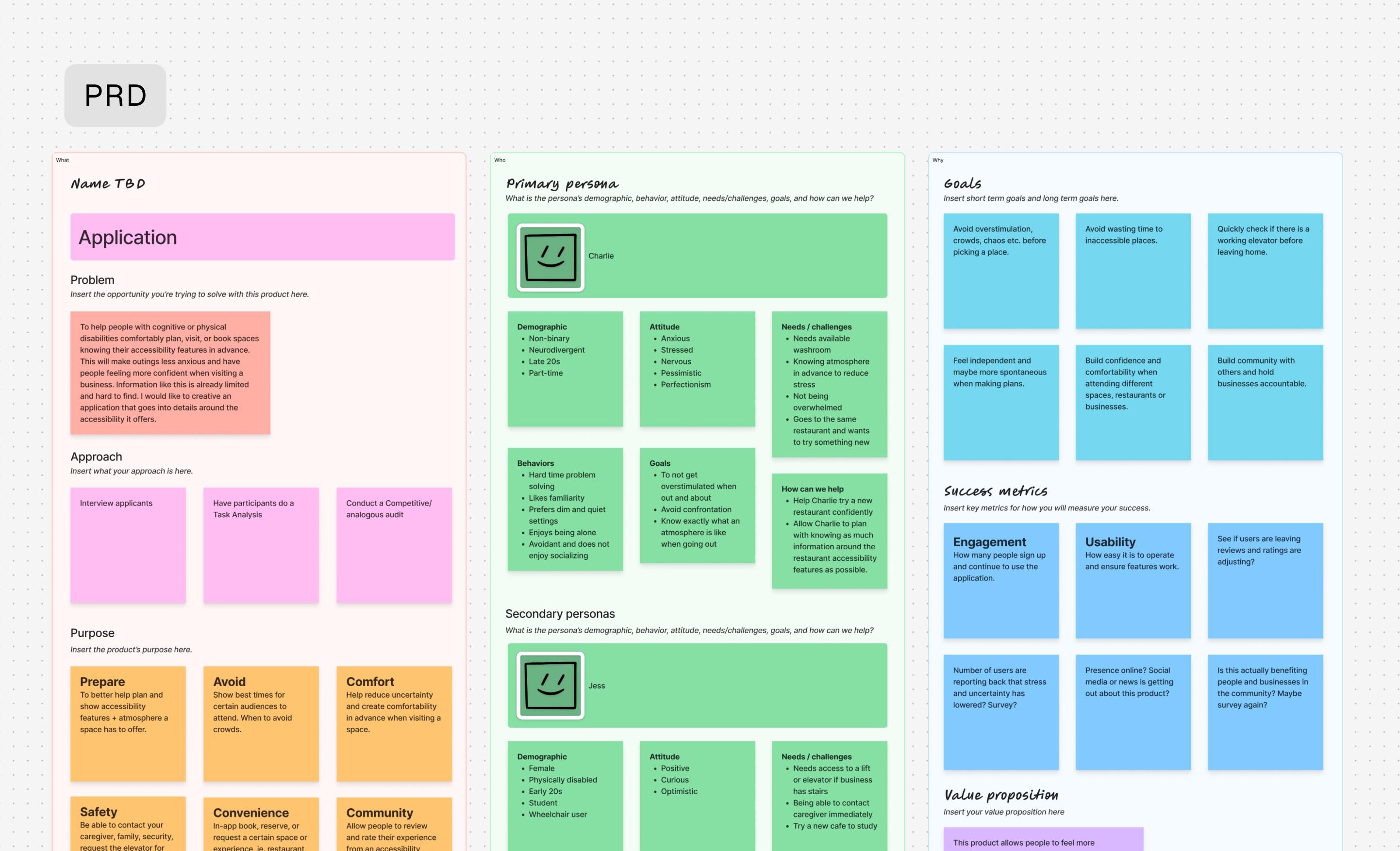
Axsphere is a decision layer for choosing physical spaces, built for people who need to understand accessibility and atmosphere before arriving. It aggregates real-time signals and user-contributed data to answer questions like noise level, crowd density, elevator access, and spatial constraints. Instead of relying on static reviews or calling ahead, the system surfaces current, situational context in one place. The result is faster decisions and fewer failed outings caused by unknown conditions.
The Problem
Accessibility Information Lacks Real Context
A user choosing between two cafes calls both ahead to ask about elevator access and crowd levels. One confirms basic accessibility, the other can’t give a clear answer. They choose the safer option, even if it’s less convenient, because the risk of arriving and getting stuck is too high.
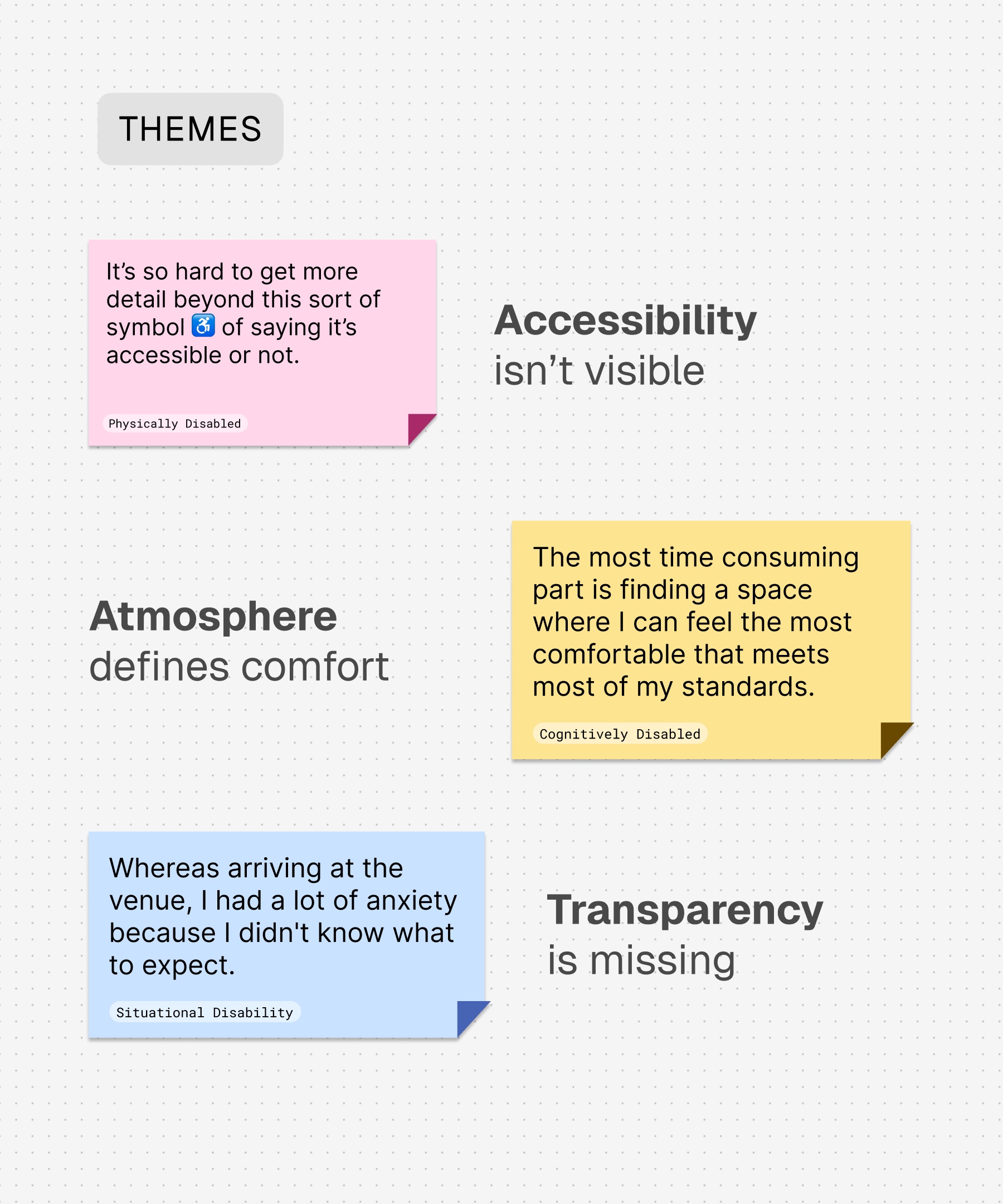
Information about physical spaces is flattened into static labels that don’t reflect real conditions. Critical details like elevator availability, crowd levels, spatial layout, and sensory environment are often missing or outdated.
As a result, people call ahead, scan reviews, and rely on past visits to determine if a space will work. When that information is incomplete or wrong, it leads to canceled plans, uncomfortable experiences, or avoiding new places entirely.
Research Insights
What Research Revealed
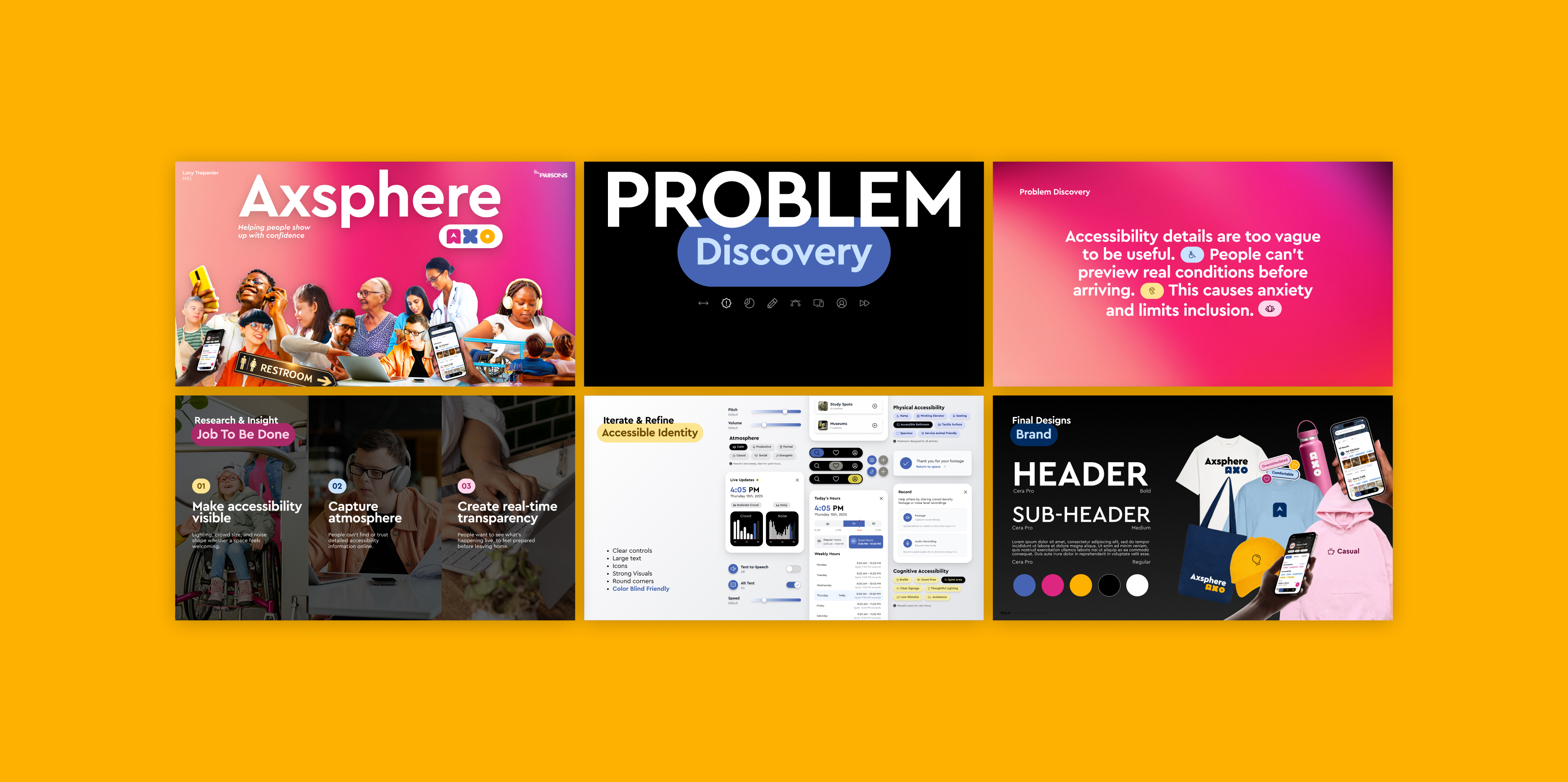
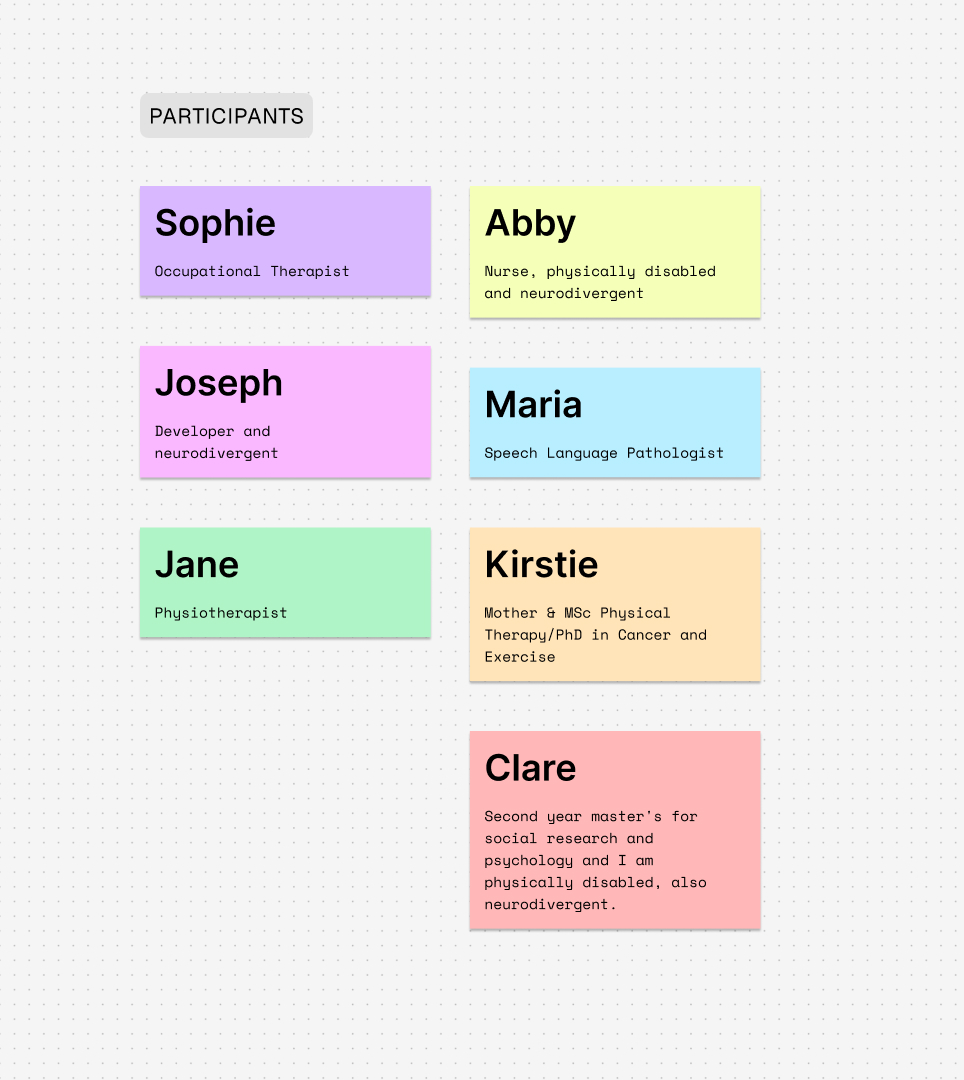
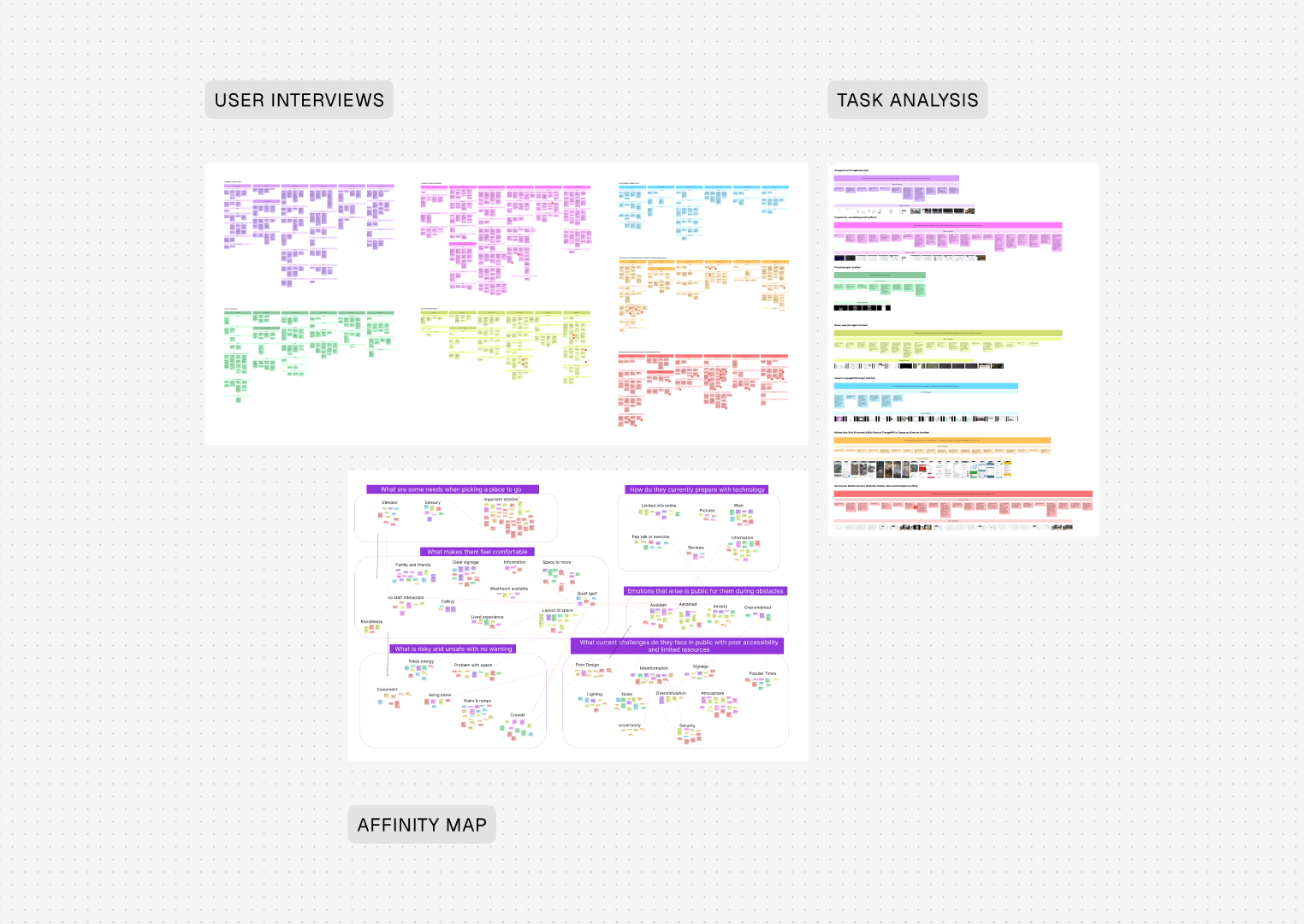
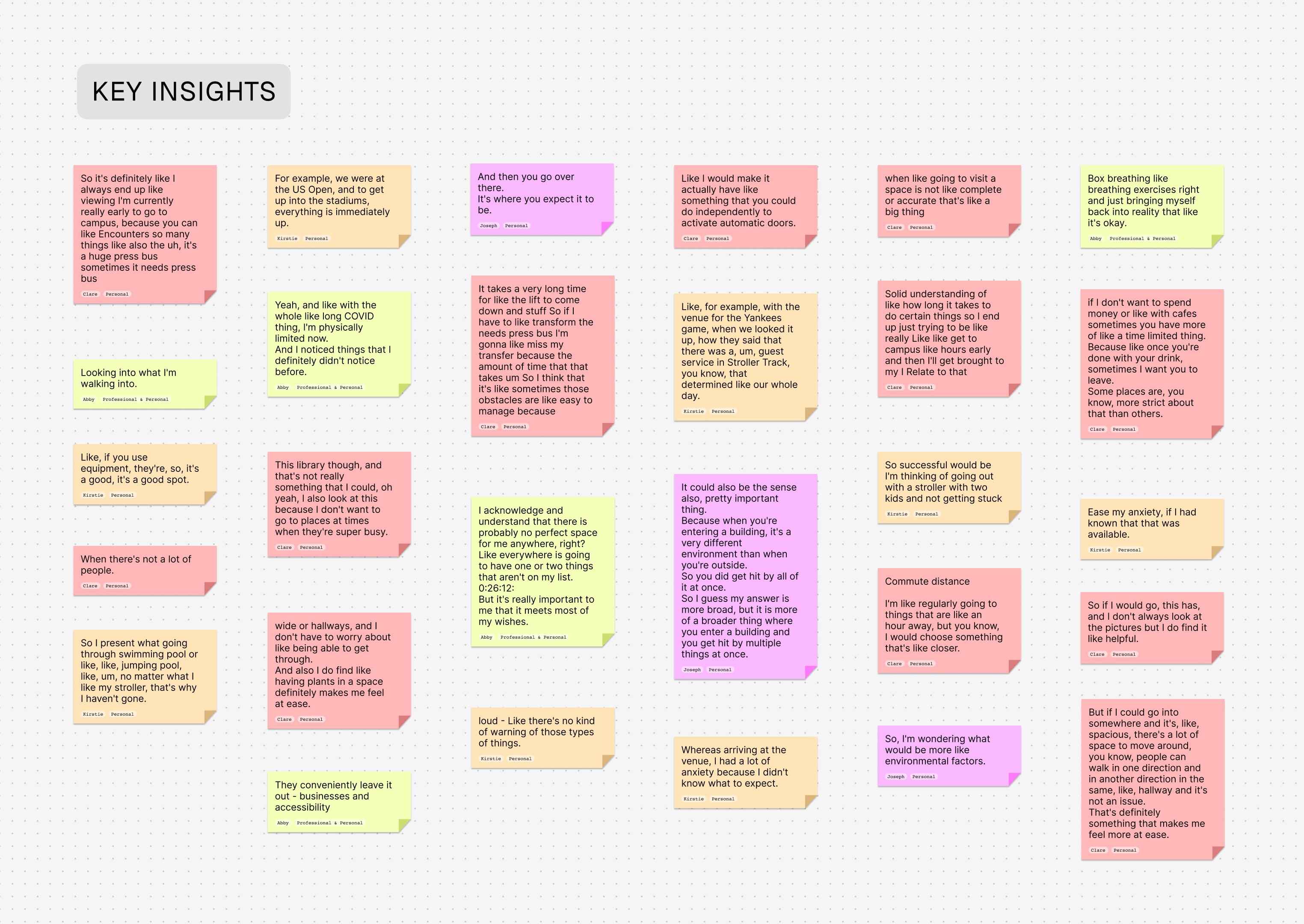
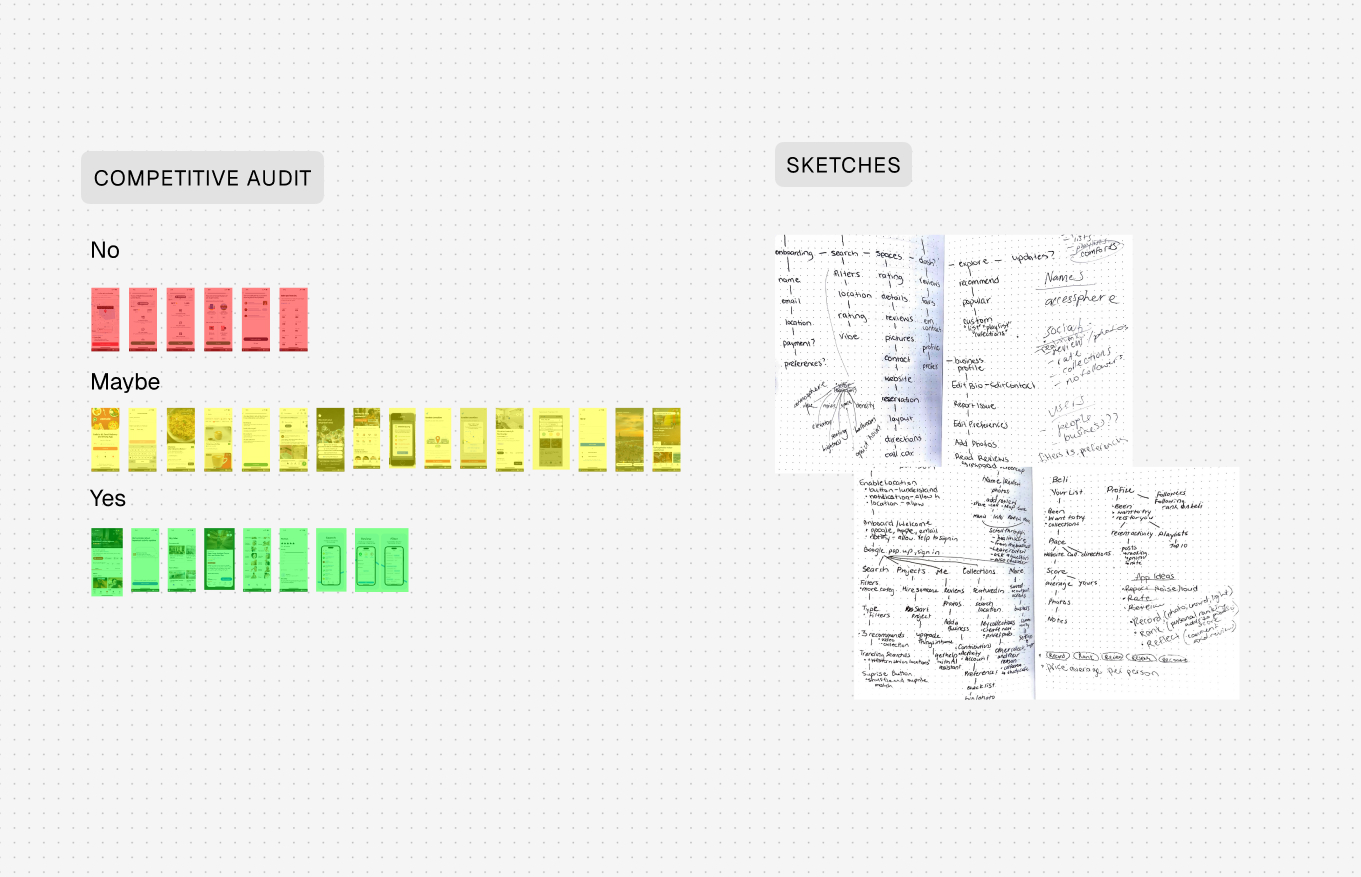
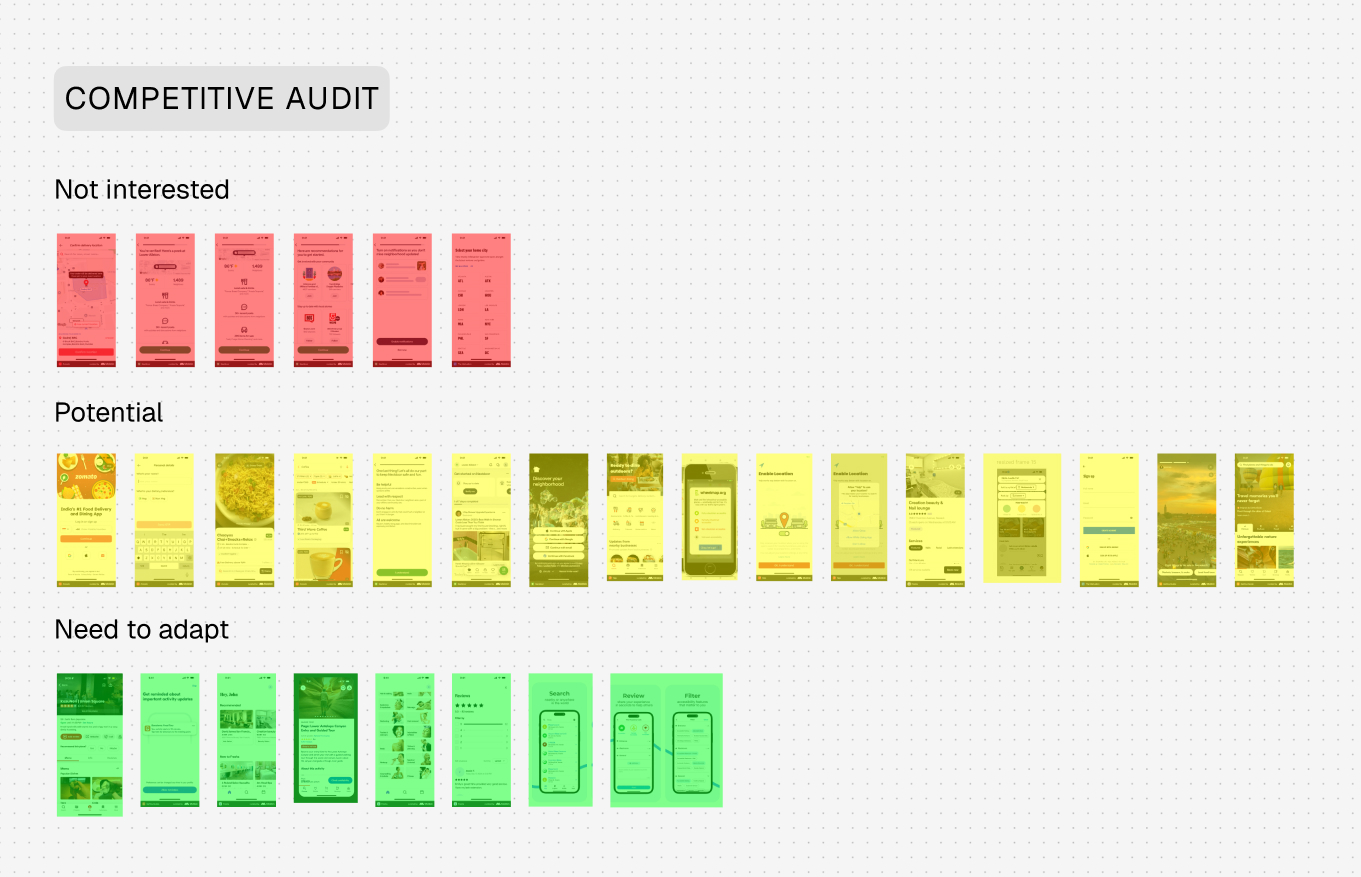
Conducted secondary research on existing accessibility platforms, contextual observation of people researching spaces at home before outings, and interviews with 3 to 5 people managing mobility and physical access needs.
Defining the Opportunity
Scoping the Right Problem
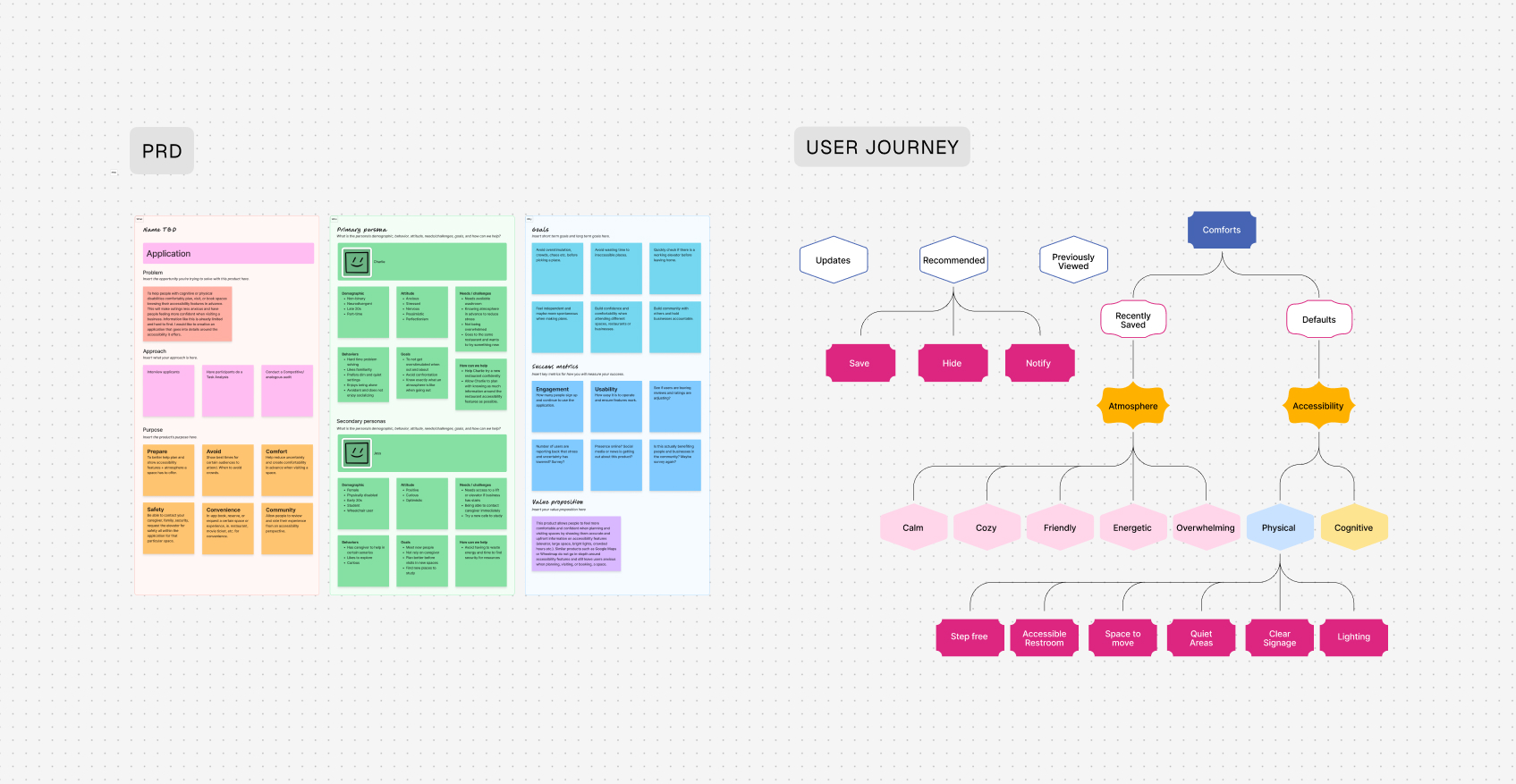
The opportunity was to shift from static place listings to a system that reflects real, changing conditions. I prioritized accessibility context, atmosphere, and real-time updates because they directly determine whether a place works in the moment. I excluded reviews and long-form content due to inconsistency and lag. This reframes discovery as a situational decision system, not a search experience.
Design Exploration
What Early Concepts Got Wrong
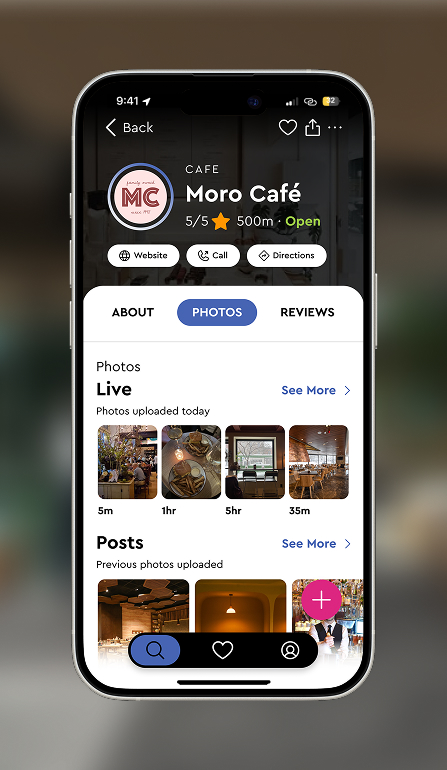
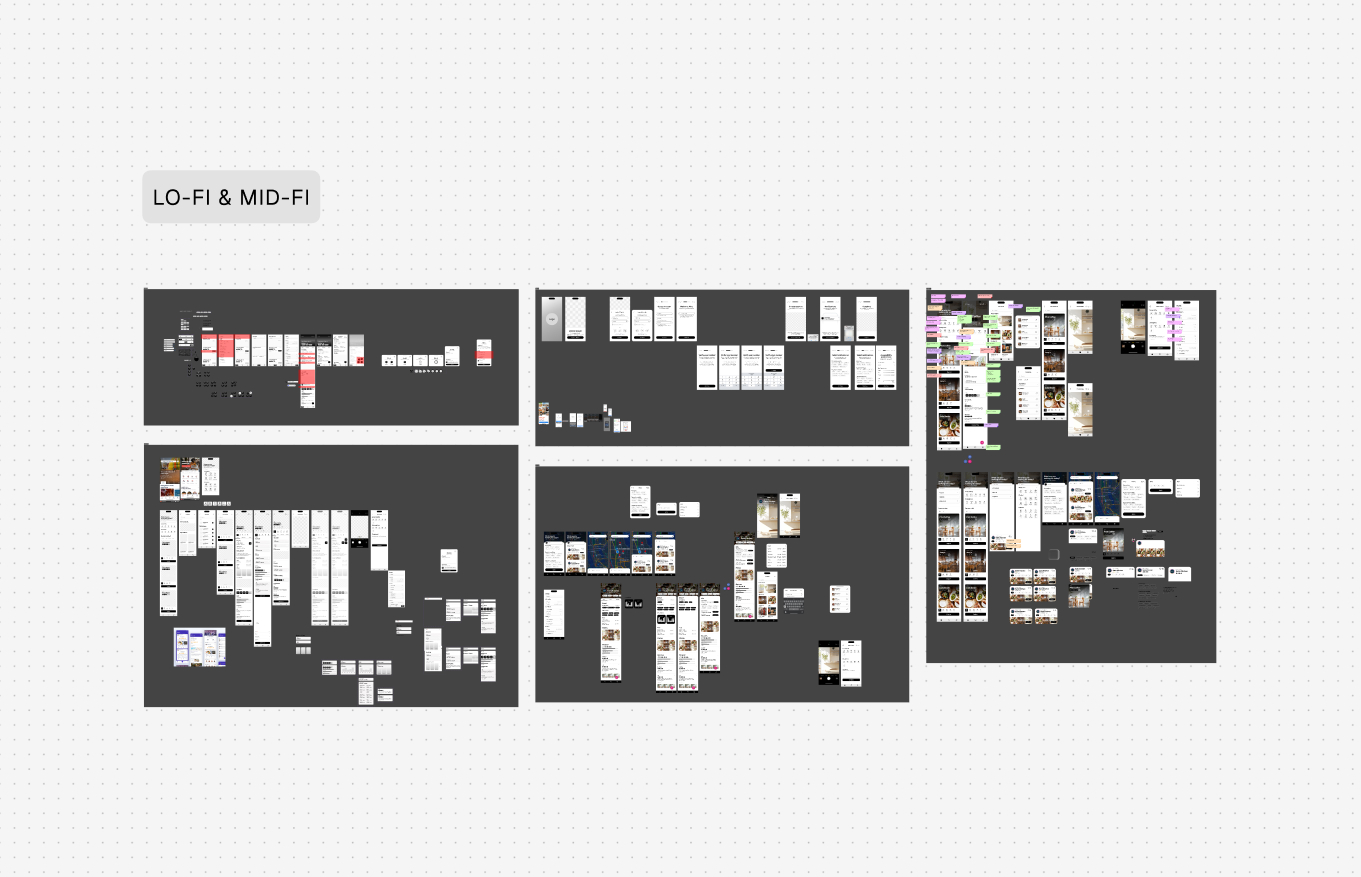
Early concepts separated accessibility and atmosphere into distinct screens, requiring users to navigate between views to build a complete picture of a space. This mirrored how existing tools work and reproduced the same fragmentation problem. I consolidated both into a unified view so users could evaluate a space holistically in a single pass. Reviews, ratings, and gamification were explored and removed because they introduced noise and didn't reliably reflect current conditions.
Test & Iterate
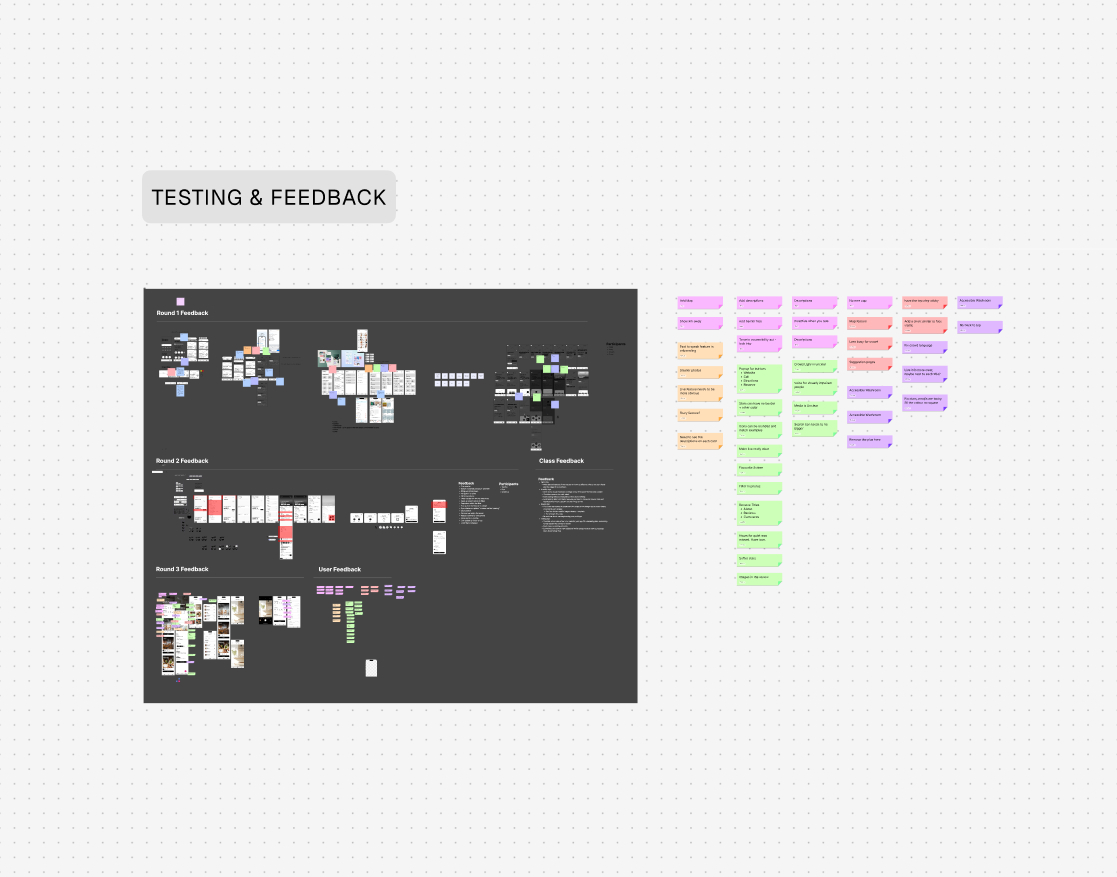
Testing with People Navigating Access Needs
Testing surfaced three recurring issues that directly shaped the product direction.
Final Product
A Product That Builds Confidence Before Arrival
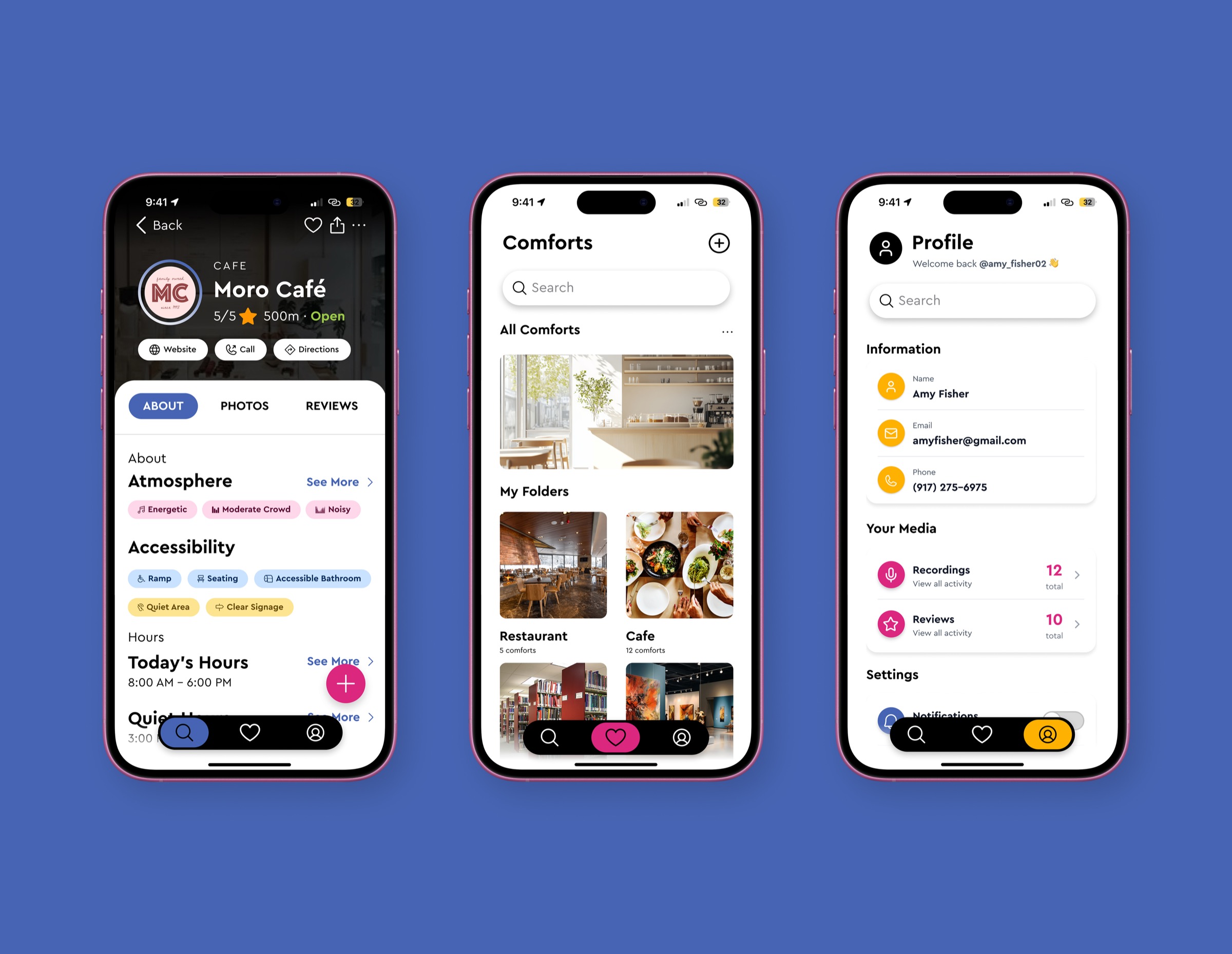
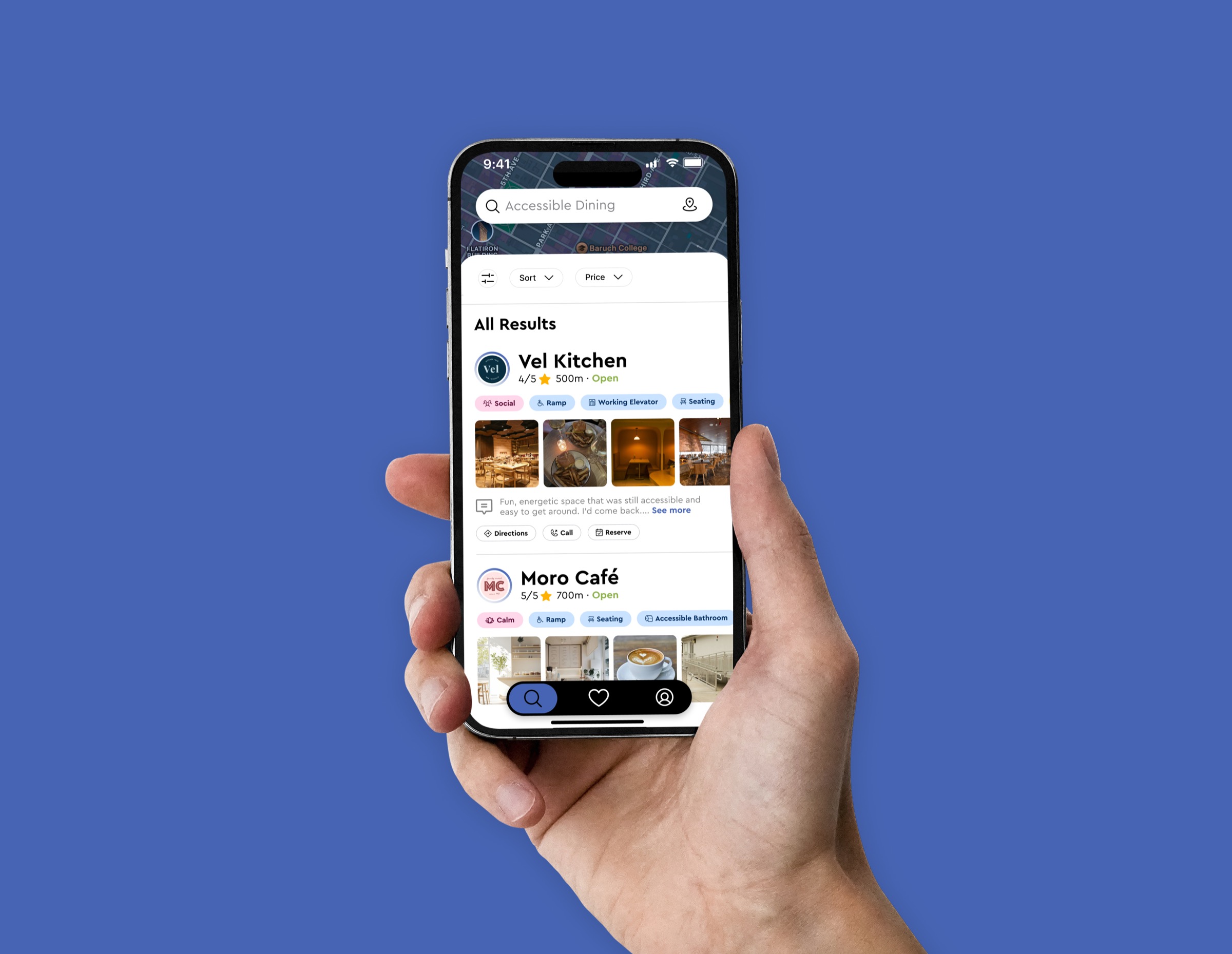
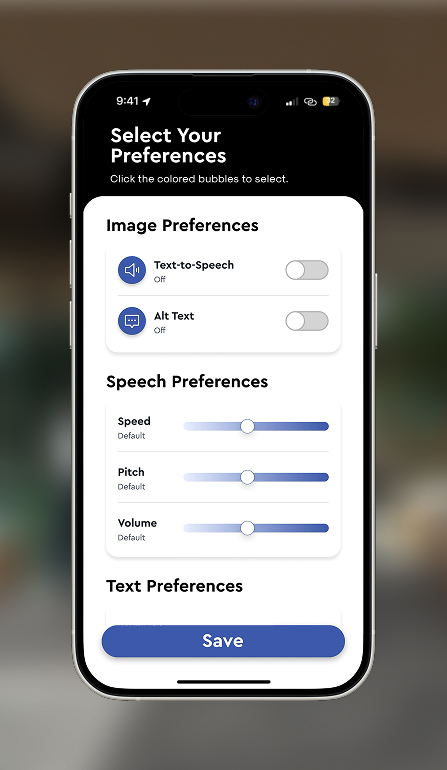
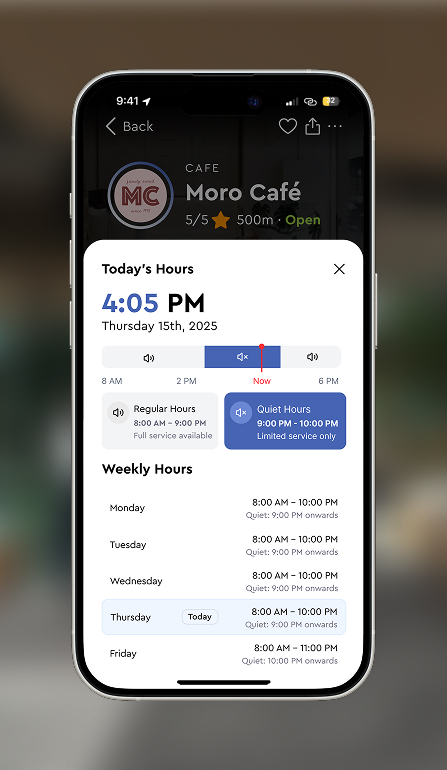
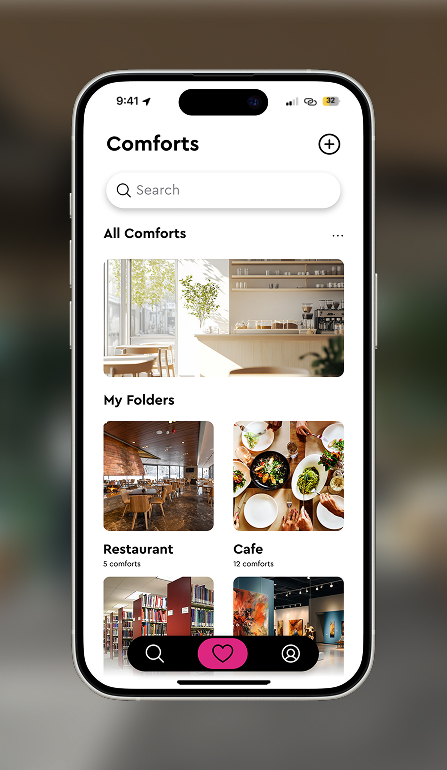
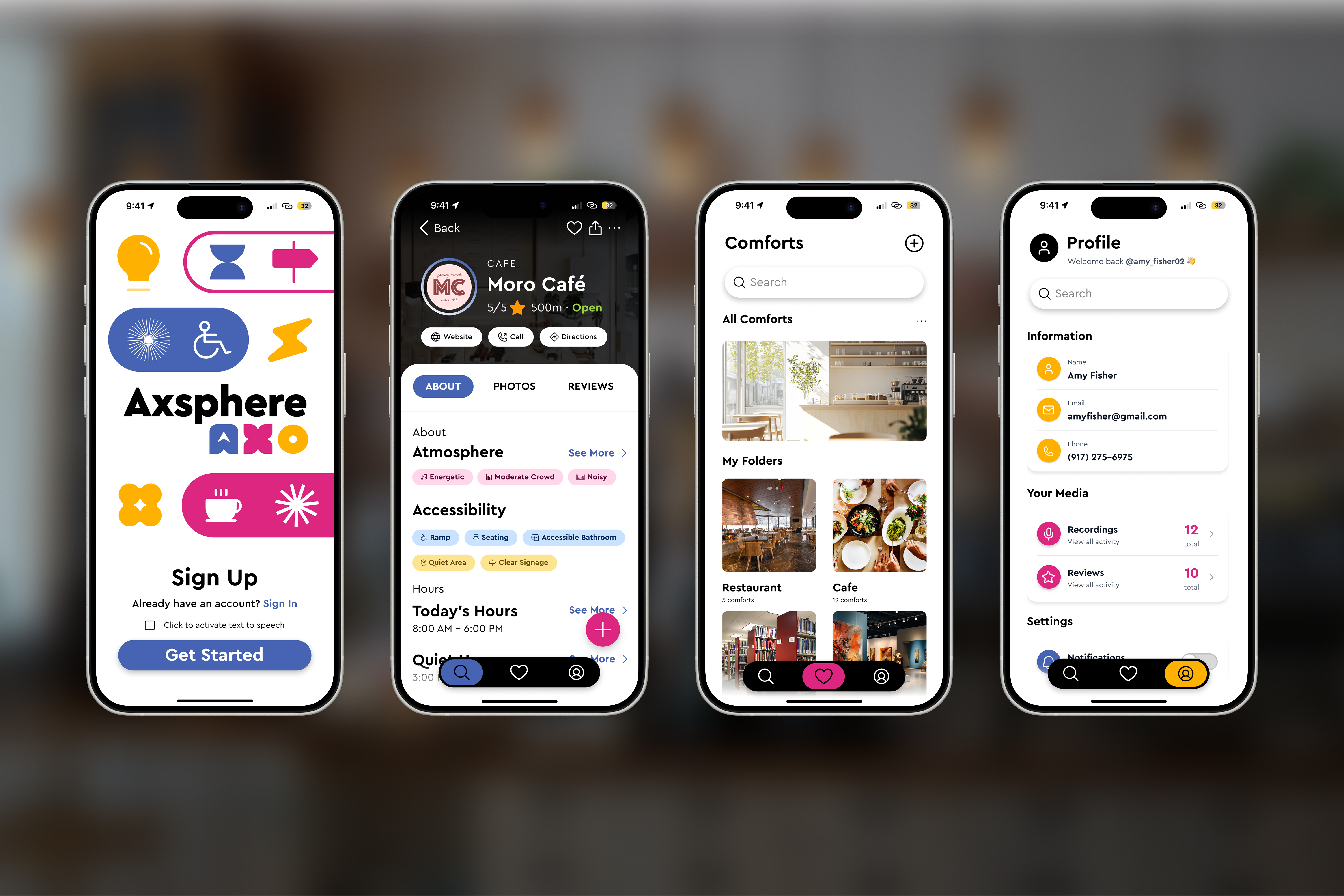
Axsphere translates real-world environments into structured, real-time signals users can act on. Users define what matters, evaluate spaces through a unified view, and decide based on current conditions. The system continuously updates through lightweight contributions, keeping information relevant at the moment of choice. This replaces fragmented research with a single decision layer.
Impact
Who It's Really For
Testing with people managing physical access needs, including an occupational therapist who directs clients to appropriate venues, revealed that fragmented, unreliable information is a professional problem, not just a personal inconvenience.
"This would actually change how I work - right now I'm directing clients based on whatever vague information I can find on Google."
Users reported reduced need to call ahead or cross-check sources before deciding. For people in caretaking or professional roles, the system's value extended beyond personal use to decisions made on behalf of others.

Reflection
Designing for Predictability, Not Just Access
This project reframed accessibility as predictability, not compliance. I shifted from designing features to defining a system that supports decisions under uncertainty, prioritizing real-time, comparable signals over static or subjective content.
A key challenge was designing for needs that are often invisible to others. Feedback from users outside these contexts highlighted how easily this problem is underestimated, reinforcing the importance of grounding decisions in lived experience rather than general assumptions.
If continued, I would focus on validating data reliability and coverage at scale, since the system depends on consistent, trusted inputs. I would also explore partnerships with businesses to maintain accuracy without relying entirely on user contribution.


Final Deck